- Productivity Stacks Newsletter
- Posts
- #268: Does waking up at 5 a.m. actually make you more productive?
#268: Does waking up at 5 a.m. actually make you more productive?
The AI productivity boom is real, but so is the burnout

Jenae Spry
March 13, 2026
Productivity Stacks Newsletter
Issue No. 268
The Best in Evidence-Based Productivity
for Small Business Owners, Freelancers & Founders
Helping You Work Smarter and Live More
The Rundown
Can 'friction-maxxing' fix your focus?
How "Deep Industry Research Agents" Can Change Your Organization
I replaced my read-it-later app with NotebookLM and stopped forgetting what I read
I used Gemini to automate Google Keep and Google Tasks, and it's been a game-changer
What if the real risk of AI isn't deepfakes — but daily whispers?
👉Did you miss an issue? Check out previous Productivity Stacks issues anytime here
Sponsor
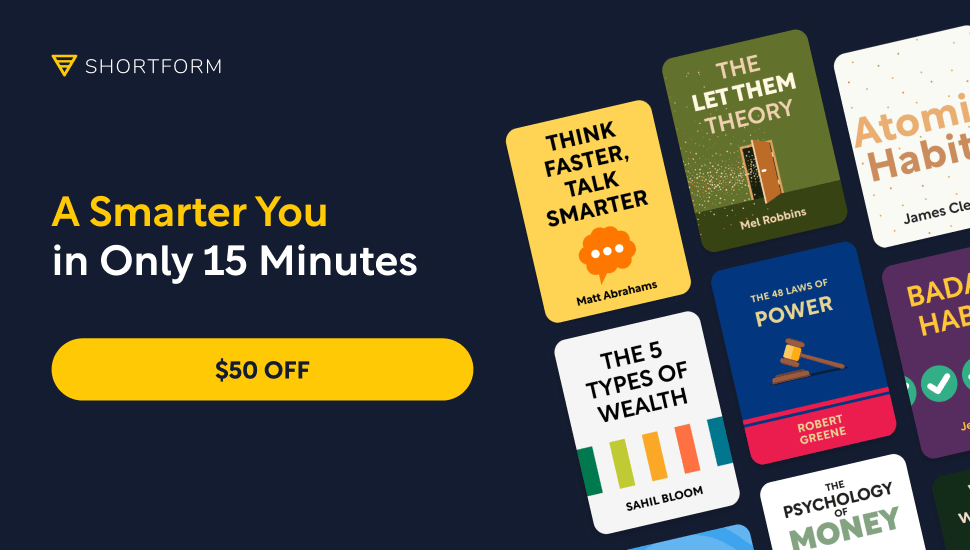
The 80/20 rule you're probably getting backwards
In the Doers Inner Circle the other day, we got talking about consuming vs. producing.
Here's what I told them: Apply the 80/20 rule. 20% consuming, 80% producing.
But here's what actually happens:
We buy a course and feel accomplished. We attend a webinar and feel productive. We finish a book and add it to our "read" ✅ list with a sense of satisfaction.
But nothing's changed. We consumed. We didn't produce.
The book sits on the shelf with our good intentions to "implement it someday when we have time." The course modules stay unwatched. The webinar notes get filed away.
We mistake consumption for accomplishment.
Reading the book isn't the win. It's what you DO with what you read that matters. But most of us never get there because the satisfaction of finishing the book tricks our brain into thinking we already did something.
Here's where Shortform helps:
Read the book (consume). Then use their guides to produce.
They include:
Actual action items inside every guide
All the key concepts organized so you can reference them when you're ready to execute
Questions that force you to apply ideas to YOUR situation
No notes to take. No "I should probably write this down." It's already done.
The gap between reading and doing gets smaller. Because producing is what actually moves your business forward.
Try for Free at https://shortform.com/express
🔥Quote/Prompt
Nothing is a waste of time if you use the experience wisely.
Use the quote as a writing or thinking prompt to finish your week strong.
A bit from mine:
(posted in our Doer Entrepreneurs Free Community — off social media)
Stop calling it wasted time.
❌ The strategy that flopped → not wasted.
❌ The systems experiment that failed → not wasted.
❌ The offer nobody bought → not wasted.
✅ All of it is information, if you choose to use it that way.
The most productive thing you can do […]
Did someone forward this to you?
📈 Performance
Running a business means your brain is already doing heavy lifting all day, and the last thing it needs is an accidental saboteur hiding in your earbuds. This piece from The Conversation breaks down what the research actually says about how your daily soundscape is quietly shaping the way you think, decide, and recover.
"Music can support repetitive or low-complexity tasks by increasing engagement and reducing boredom. But when tasks rely on language, problem-solving or new learning, the same music can compete for attention, making sustained thinking feel more effortful... sound can reshape how thinking is experienced from the inside, long before measurable performance changes become visible."
Key Insights:
Match your sound to your task because lyrical music during writing, reading, or analytical work actively competes with your brain's language processing and makes the work harder than it needs to be. For example, saving your favorite playlist for invoicing or inbox triage instead of deep work can make a real difference.
Your own signals matter more than any "focus playlist" recommendation. Rising distraction, unusual fatigue, or the feeling you're grinding harder than usual are signs your audio environment needs adjusting, not your effort level. Personally, I can listen to lyric music for writing but it has to be a certain type or in another language, for example.
Silence isn't wasted time. Quiet intervals between tasks support the kind of background brain activity linked to memory integration, reflection, and planning, which are functions that directly affect how well you lead and make decisions.
Read the full article for a breakdown of three actionable principles to redesign your soundscape around the kind of thinking your work actually demands.
⚙️ Optimization
YES! This article guys! The 5 a.m. club has done a great job selling the idea that early rising is the secret sauce of high performers, but correlation is not causation. People who naturally wake up at 4 a.m. may very well be more productive — because THEY are not exhausted. This piece from Futura does a solid job of bringing the science to what many of us have suspected all along: forcing yourself into someone else's biological clock isn't a productivity hack, it's a recipe for burnout.
"Modern work and school schedules are built around early starts. When your natural rhythm aligns with those schedules, performance is easier to sustain. When it doesn't, the mismatch accumulates. Researchers call this accumulation social jetlag; the chronic discrepancy between a person's biological clock and their social obligations."
Key Insights:
Chronotype is largely genetic, not a character flaw. A genome-wide study of nearly 700,000 participants confirmed that sleep timing is substantially heritable, meaning your natural wake time is biology, not laziness.
The health risks tied to evening chronotypes come from misalignment with early schedules, not from being a night owl. For example, social jetlag has been independently linked to higher BMI, elevated blood pressure, and increased risk of depression and anxiety.
Finding your actual productive hours starts with observation. Tracking when you naturally wake on obligation-free days and noting when alertness peaks gives you real data about your own wiring.
Read the full article for practical steps to identify your chronotype and small adjustments that can help you work with your biology instead of against it.
⏲️ Time Management
Productivity advice has a habit of treating focus like a personal choice — just block your calendar, silence your phone, and do the work. But that advice was largely written for people whose lives actually allow for that kind of uninterrupted time. This piece from Fast Company reframes the conversation entirely, and if you've ever felt like your scattered day was a personal failing, it's worth a read.
"Many people—especially women—do not choose polychronic time. They are assigned to it. Women continue to shoulder a disproportionate share of unpaid care work. Beyond the visible tasks lies the mental load: the constant anticipation of needs, the quiet monitoring, the emotional labor that keeps family life coherent. Even in dual-income households, research consistently finds that this invisible infrastructure of daily life rests largely on women's shoulders."
Key Insights:
Monochronic workers do one thing at a time and thrive with structure, while polychronic workers switch contexts fluidly and excel in relational or unpredictable environments. Neither is superior — they are adaptive responses to different circumstances.
Workplaces are built around monochronic assumptions, which means people doing the most context-switching often get penalized for it professionally, even when that switching is not optional. For example, responsiveness and relational attentiveness get misread as lack of discipline rather than recognized as skill.
Knowing which style fits you naturally is useful, but it doesn't have to rule your workday. You don't have to force yourself into rigid time blocks if your brain needs flexibility, but leaving the day to 100% whim rarely helps either. If traditional productivity advice has never quite fit how your brain works, theme blocking might be the middle ground worth trying.
Read the full article for a deeper look at how organizations can rethink performance metrics and flexibility policies to account for the unequal distribution of cognitive labor.
💻 Tools & Technology
Late to the NotebookLM party here, but fully converted. If you've ever stared at a pile of research, articles, and notes trying to remember which stat came from which study, this tool was basically built for that problem. Unlike most AI tools that pull from everything on the internet, NotebookLM only works with what you give it, which means the answers it gives you are actually grounded in your specific sources. This breakdown from XDA Developers walks through five ways to get the most out of it.
"NotebookLM's AI analyzes the content of each source and understands the relationships between different pieces of information. Instead of summarizing each source individually, it can synthesize information across all your sources. At any point, you can ask specific questions and NotebookLM will search across your documents and provide a relevant answer."
Key Insights:
You can create what is essentially a personal search engine for any topic or project by uploading articles, PDFs, YouTube links, and spreadsheets into a single notebook and then querying across all of them at once.
The audio overview feature lets you generate a natural-sounding summary of your uploaded documents, which is useful for reviewing research while doing something else that doesn't require your full attention.
Notebooks can be shared with team members, and adding a welcome note when you share gives collaborators immediate context without requiring a separate briefing.
Read the full article for a step-by-step walkthrough of all five features including mind maps, note-saving options, and collaboration settings.
🤖 AI
Most productivity advice right now reads like a hype reel for AI tools, and look, the gains are real. But there's a conversation happening a lot less loudly about what happens when those gains just become the new baseline expectation. This piece puts words to something a lot of us are quietly experiencing, and it's worth sitting with.
"The promise was that AI would free us up to focus on higher-level thinking, creativity, and strategy. The reality for many people is that it's just raised the bar for what counts as 'enough.' When you can generate a first draft in seconds, suddenly you're expected to produce five drafts instead of one. When you can analyse data faster, you're given more data to analyse. The goalposts keep moving, and the finish line never seems to get any closer."
Key Insights:
The cognitive overhead of managing AI tools is real work that nobody is counting. Prompting, reviewing, fact-checking, and correcting AI outputs takes mental energy that doesn't show up in any productivity metric but absolutely shows up in how you feel at the end of the day.
When everyone has access to the same tools, the bar for "good enough" rises across the board, which means standing out actually requires more effort than it did before, not less.
A healthier approach means being selective about what you hand off to AI, specifically reserving it for tasks that free up genuine mental space rather than just creating room for more tasks to fill.
Read the full article for a frank look at the acceleration trap, decision fatigue, and what sustainable AI use actually looks like in practice.
🎉 Celebration Corner
Every week Doers Inner Circle members do a weekly review & get help when they need it — check out the progress they made this week!
Handled all deadlines!
New ongoing project at top rate + new client.
What did you do this week? We feature non-member successes too. Just post them here!
🔒Inner Circle: Events & Announcements
NEW EVENT: The 90-day Planning Formula BASH kicks off March 23! Learn more here
Monday: {EU Time} Work ON Business. Theme: 3️⃣ Sales & Marketing RSVP here
Tuesday: Work ON Business. Theme: 3️⃣ Sales & Marketing RSVP here
Monday/Friday: Goal Setting + Plan Your Week Party
Accelerators: March 20 is your Office Hours RSVP here
We will soon be adding Referral Perks — Refer now to start earning! 👇
As a reminder, you’re getting this twice-weekly newsletter because you opted in to receive awesome productivity and systems tips through one of these methods:
Doer Entrepreneurs, Doers Express Newsletter, Productivity Stacks, Success by Rx, ClickUp Facebook Group, Productive & Successful Translators Facebook Group.
If you’re not interested in improving your and your business’s productivity so you’d like to break up, that’s definitely a bummer. But, you can always use the unsubscribe link at the bottom if you do not want to get these tips — but keep in mind I am hyper-focused on making these twice-weekly emails as valuable as possible.
Got a tip? Hit reply!
I hope you found this valuable!
Wishing you much productivity!
- Jenae :)
Interested in reaching thousands of motivated small business owners, freelancers & founders?
Hit reply and let’s chat about sponsorship. We only include ads that match our mission: to help our readers work smarter and live more.